I help people and organizations stay grounded, clear, and adaptive in times of change.
Through resilience coaching, foresight consulting, and embodied leadership, I guide them turn uncertainty into clarity and purposeful action.
© Lia Meissner. Resilience Coaching | Embodied Leadership | Strategic Foresight Consulting. All rights reserved. Impressum & Datenschutz

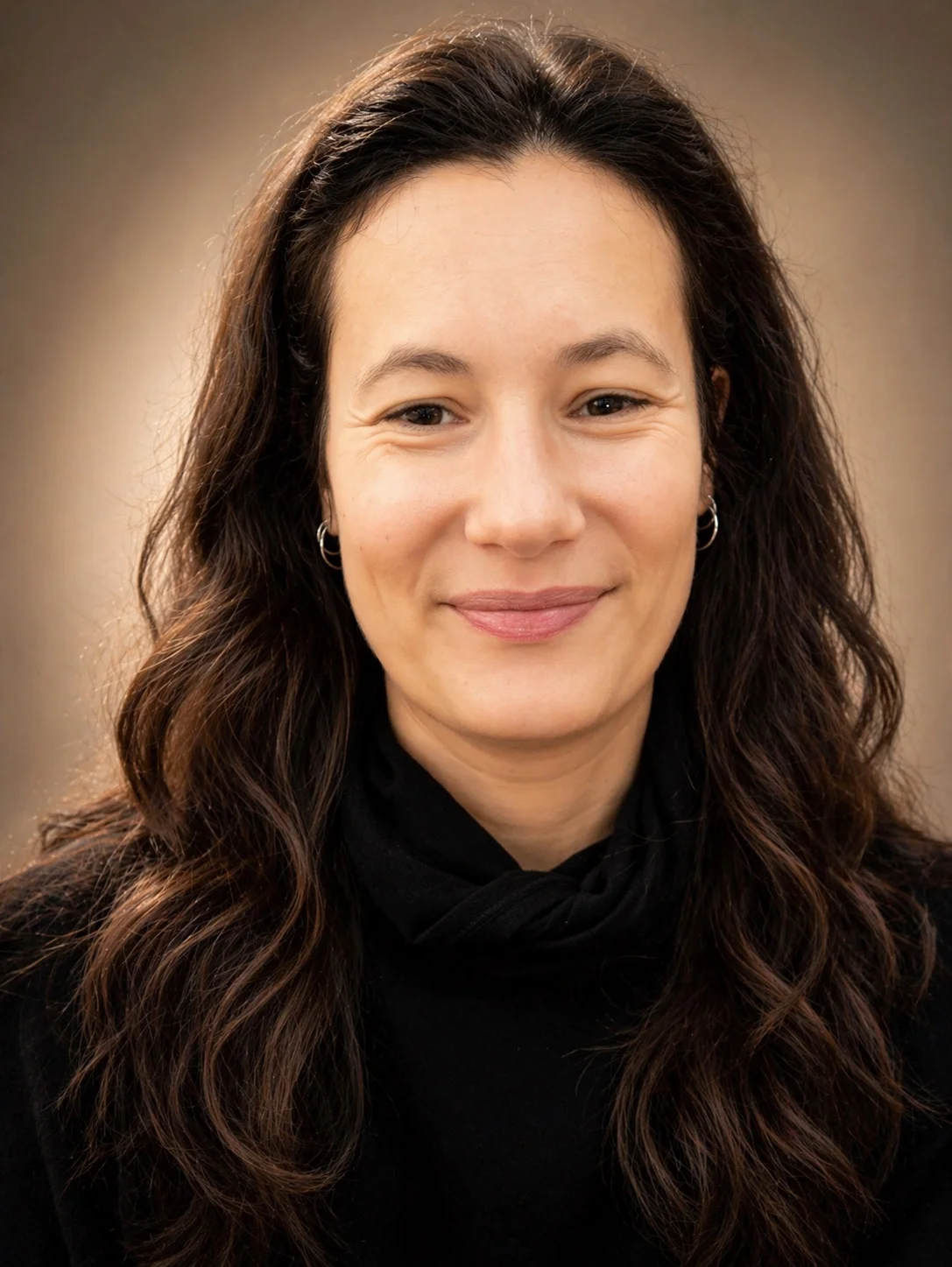
Hi, I’m Lia Meissner — systemic resilience coach, futures scientist, and guide for transformation.
For over a decade, I work at the intersection of psychology, foresight, and leadership, supporting people and organizations in navigating uncertainty, building resilience, and shaping futures that feel aligned, alive and sustainable.My work bridges the personal and the collective. I work with embodied awareness and wise decision-making as forces that shape larger systems — and influence how we live, work, and lead in times of change.My work is grounded in training across psychology, social sciences, and systems thinking. I hold a BSc in Psychology and Sociology and an MA in Philosophy, Politics, and Economics, and I am trained as a systemic counsellor and therapist.Alongside my academic background, I train and work with body-based practices including Osteo-Thai Massage and Fascial Maneuvers, informing my approach to embodiment, nervous system regulation, and trauma-sensitive processes.
How do we build inner resilience in times of constant transformation?I support individuals through resilience coaching — helping them restore balance, clarity, and connection in times of change.
Personalized 1:1 sessions supporting you in rebuilding safety, energy, and inner stability during times of transition. This work combines systemic counselling, embodied practices, and nervous system regulation.
A self-paced resilience framework for rebuilding foundations and redesigning life after disruption. Grounded in psychology, embodiment, and systems thinking (launching in spring 2026).
I also work with teams and organizations in resilience workshops, strengthening collective stability, adaptability, and collaboration in times of uncertainty.
How do we find clarity when everything around us keeps shifting?
I help organizations develop future literacy and resilience — supporting teams and leaders to anticipate trends, explore emerging possibilities, and turn uncertainty into strategy.
I teach foresight and future literacy to executive programs, companies, and universities , building the capacity to navigate complexity and act with clarity in times of change.
Through keynotes, applied research, and advisory work, I help organizations make sense of change, design future-ready strategies, and translate foresight into meaningful action.
I teach strategic foresight and offer the following workshop formats for organizations across the private sector, public institutions, NGOs, and universities.
Inventing the Future: Introduction to Strategic Foresight
This introductory workshop offers a structured overview of strategic foresight as a practice for navigating complexity, uncertainty, and long-term change. Participants learn how foresight supports strategic thinking beyond forecasting and short-term planning.The workshop introduces core concepts, the intellectual roots of futures thinking, and key foresight methods such as horizon scanning, trend analysis, environmental scanning, and scenario techniques. It provides a solid foundation for applying foresight in organizational contexts.Duration: 0.5–1 day
Format: Online or in person
Group size: 5–20 participants (adaptable)
Exploring Alternative Futures: Advanced Workshop on Scenario Planning
This advanced workshop focuses on scenario development as a central method of strategic foresight. Building on prior foresight knowledge, participants learn how to identify and assess key drivers of change, construct coherent and contrasting future scenarios, and work with different future logics.Through guided, hands-on group work, participants experience the main steps of an exploratory scenario process and reflect on how scenarios can be used for strategic orientation and decision-making in their own contexts.Duration: 1-2 days
Format: online or in person
Group size: 5-20 participants (adaptable)
Tailor-Made Trainings
Beyond these formats, I design custom foresight trainings and learning journeys tailored to the specific needs, questions, and strategic challenges of your organization. Content, duration, and methods are adapted to your context — from short introductions to multi-day in-depth formats.
Do you need support in preparing for the future? I offer inspiring keynotes, applied research, and advisory work to help you make sense of change, design future-ready strategies, and translate foresight into meaningful action.
Speaking
Are you noticing uncertainty turning into future anxiety within your organization?
My keynotes create orientation and momentum by helping audiences move from fear of the future to a sense of agency and possibility. I translate complexity into clarity and open spaces for collective reflection and courage.
Applied Futures Studies
Do you have a strategic question about the future that needs solid grounding rather than speculation?
With over eight years of experience in applied futures studies, I design and conduct research projects tailored to your context — using methods such as surveys, expert interviews, expert workshops, trend analysis, and scenario analysis to turn uncertainty into insight.
Advisory
Do you need a sparring partner to think through complex plans and decisions?
I support leaders and teams as a strategic counterpart — helping them clarify intentions, challenge assumptions, and explore future-ready options with depth and perspective.
This portfolio showcases selected projects from the past decade, reflecting my work at the intersection of futures thinking, embodiment, and transformation.If you’d like to explore how this work could support your context, feel free to get in touch.
Strategic Foresight as a practice to help organizations move from reactive decision-making to anticipatory, resilient strategy
An integrative framework for rebuilding life after crisis, disruption, or profound change
Building Futures Literacy and strategic capacity through applied foresight education
Reclaiming the body as a source of intelligence, regulation, and wise action in complex times
Exploring carbon-neutral shipping by returning to wind, muscle power, and sea(wo)manship
Mapping the inner landscape of loss
Using food as a foundation for health — informed by microbiome science, bioindividuality, and functional nutrition
Dance as a practice of presence, embodied research, and collective attunement.
Climate-resilient forest transformation through biodiversity, dialogue, and coordinated action
T
How can organizations take sound strategic decisions today for tomorrow, without knowing what the future will bring?
In this body of work, I advised organizations on strategic decision-making through applied research at the edge of existing knowledge. Working in commissioned research contexts, I supported leadership teams and decision-makers in addressing complex, forward-looking questions where evidence was incomplete and uncertainty high. This included extensive advisory and research work at the Fraunhofer Institute for Systems and Innovation Research ISI (2018–2019) and later at VDI/VDE Innovation + Technik (2021–2025), primarily in collaboration with public sector organizations.

Operating at this knowledge frontier, I combined scientifically grounded analysis with methods of strategic foresight, including horizon scanning, scenario planning, trend analysis, surveys, expert interviews, expert workshops, and structured stakeholder engagement. The goal was not prediction, but sensemaking and futures literacy: to explore emerging developments, surface and challenge dominant assumptions, and translate anticipatory insights into tailored strategic options that strengthen an organization’s capacity for learning, adaptation, and future-ready decision-making.The selected publications listed below provide further insight into the scope, methods, and thematic focus of my work:
Meißner et al. (2024): 7 Foresight-Methoden zur erfolgreichen Strategieentwicklung. Institut für Innovation und Technik.
Hubel, Nikolas; Peters, Robert; Saussure, Marlène de; Nerger, Michael; Meißner, Lia; Hungerland, Tobias (2024): Gesellschaftliche Auswirkungen hybrider Arbeitsformen.. Büro für Technikfolgen-Abschätzung beim Deutschen Bundestag (TAB).
Hungerland, Tobias; Meißner, Lia; Abel, Sebastian; Nögel, Lukas; Czerniak-Wilmes, Julia(2024): Innovative Antriebe und Kraftstoffe für einen klimaverträglicheren Luftverkehr.. Büro für Technikfolgen-Abschätzung beim Deutschen Bundestag (TAB).
Meißner, Lia; Czerniak-Wilmes, Julia; Kind, Sonja (2024): Seltene Erden: Rohstoffsicherung und Potenziale der Gewinnung in Europa.. Büro für Technikfolgen-Abschätzung beim Deutschen Bundestag (TAB).
Tobias Jetzke, Sebastian Abel, Lia Meißner, Stephan Richter, Jakob Michelmann, Oliver Ziegler, Lena Domröse, Ulrike Knörzer, Julia Olliges, Benno Keppner (2023): Von Quantencomputing über die Zukunft der Innenstädte bis zu einer neuen Weltordnung. Umweltbundesamt.
Jetzke, Tobias; Meißner, Lia; Czerniak-Wilmes, Julia; Kind, Sonja; Bogenstahl, Christoph (2023): Sustainable Cooling – nachhaltige Kühlungsstrategien. Büro für Technikfolgen-Abschätzung beim Deutschen Bundestag (TAB).
Meißner, Lia; Kind, Sonja (2022): Innovative Schiffbaukonzepte: Beitrag zur Nachhaltigkeit. Büro für Technikfolgen-Abschätzung beim Deutschen Bundestag (TAB).
Schirrmeister, Elna; Meißner, Lia; Gutknecht, Ralph; Göhring, Anne-Louise (2019): Analyse organisationsspezifischer Biases im Kontext von Innovationsmanagement und Foresight.
How can we rebuild a life that feels coherent, alive, and sustainable after crisis, loss, or profound disruption?
Life Repair Kit is an integrative framework for people navigating major life transitions such as burnout, illness, separation, identity shifts, or the collapse of long-held plans. It starts from the recognition that after crisis, returning to “how things were” is often neither possible nor desirable. What is needed instead is a careful, grounded process of rebuilding.The work brings together insights from psychology, systemic thinking, embodiment, nervous system regulation, and resilience research. Rather than offering quick fixes or optimization strategies, Life Repair Kit focuses on stabilizing foundations: restoring safety in the body, clarifying inner needs and values, rebuilding daily rhythms, and reconnecting with meaning, agency, and belonging.


Life Repair Kit treats crisis not as personal failure, but as a threshold. By working across multiple dimensions of life — body, mind, nervous system, relationships, and purpose — it supports people in integrating what has been broken and shaping a life that feels more truthful, resilient, and aligned than before.
How can foresight become a shared strategic capability?
Teaching Strategic Foresight focuses on capacity building: Enabling people to engage with uncertainty, complexity, and transformation in a structured and reflective way. As a lecturer at the Freie Universität Berlin (Center for Continuing Education), I design and teach practice-oriented foresight courses for professionals in higher education, research, and leadership contexts.My teaching combines conceptual foundations with hands-on application. Participants learn core foresight concepts, distinguish foresight from forecasting, and work with methods such as horizon scanning, trend analysis, and scenario planning. Particular emphasis is placed on developing futures literacy — the ability to question assumptions, hold multiple possible futures, and use foresight as a tool for strategic orientation and resilience.
What becomes possible when we overcome the body–mind split and reclaim embodied intelligence as a legitimate form of knowing, sensing, and leading?
Embodied Leadership starts from the understanding that many of today’s global challenges — like climate collaps, loss of biodiversity, social fragmentation and collective disorientation — cannot be addressed through cognitive intelligence alone. They require embodied knowledge, emotional wisdom, and the capacity to regulate the nervous system under pressure. This work responds to a deeply ingrained body–mind split by restoring the body as a legitimate source of perception, insight, and agency in leadership and decision-making.


Embodied Leadership integrates somatic awareness, nervous system regulation, and trauma-informed practice to support leaders in navigating complexity from a grounded and responsive place. One key method within this work is Fascial Maneuvers, which engage the body’s connective tissue network — fascia — as a sensory system that continuously communicates with the brain and shapes posture, movement, and our sense of inner coherence.Through subtle, compressive movements and body-based practices, leaders learn to regulate stress, release stored tension, and expand their capacity to respond rather than react. This approach is particularly relevant in a German context, where many bodies still carry transgenerational imprints of war, displacement, and collective trauma. By working bottom-up rather than purely cognitively, change can emerge gradually, sustainably, and with greater integrity.From this foundation, leadership shifts. Leaders who are attuned to their bodies, capable of regulating pressure, and willing to trust embodied signals act with greater clarity, resilience, and responsiveness in complex and uncertain environments.
How can global trade and maritime transport be reimagined beyond fossil fuels, efficiency myths, and extractive speed?
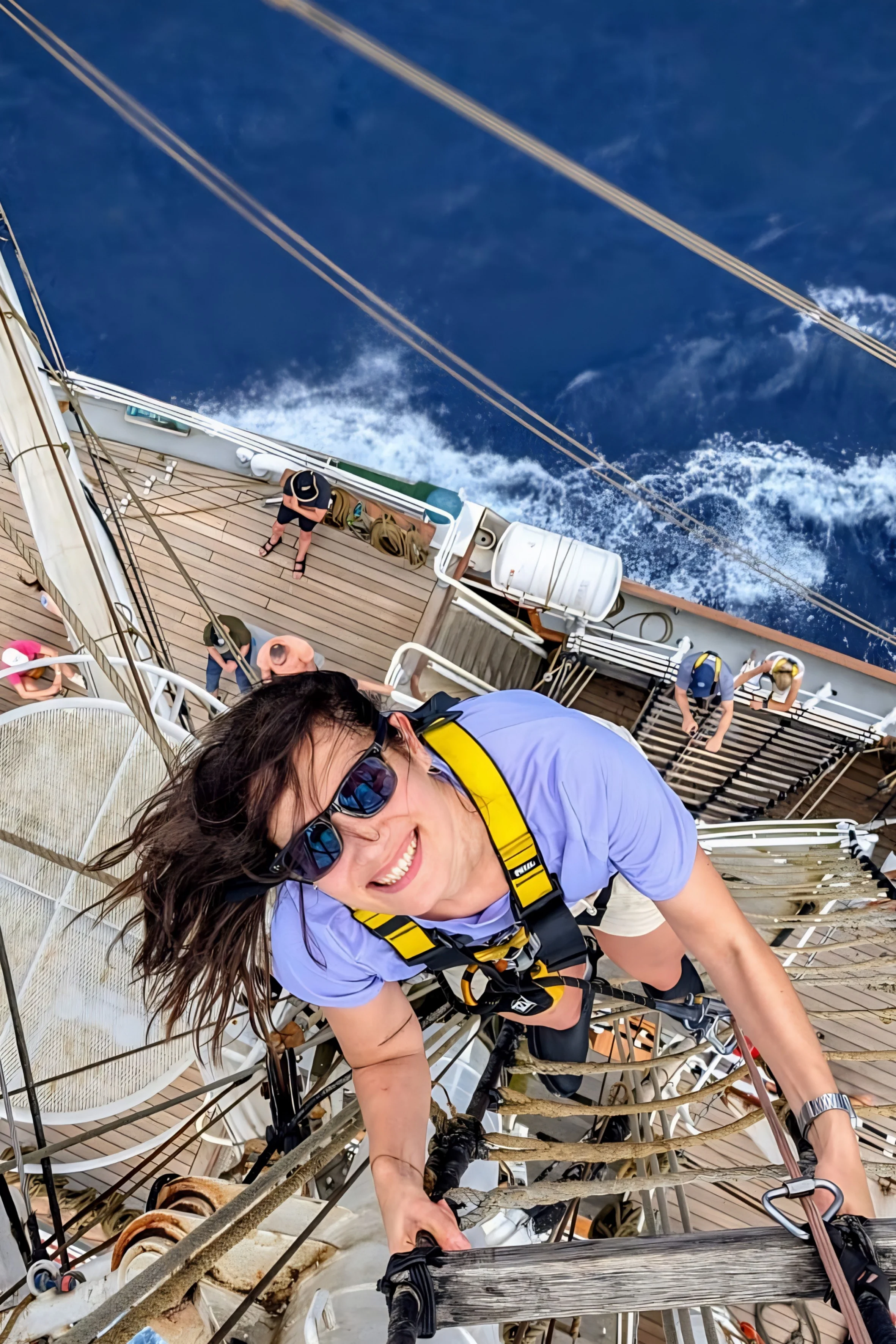
My wish to cross the Atlantic under sail was rooted in a simple but radical question: If global trade is the backbone of globalization, how can it function without fossil fuels? With Ocean Futures, I explored alternatives by returning to one of the oldest transport technologies humanity has ever known: Sailing.


As a trainee on traditional wooden tall ship, we sailed cocoa, coffee, and rum from the Caribbean to Europe — almost entirely CO₂-neutral. Life on board was deliberately low-tech: No engine, no refrigerator, no hot water, no shower, no internet, no smartphone - only the sound of the wind, muscle power, careful planning and provisioning, good old bucket showers, shared presence, and sea(wo)manship.Working at sea followed a radically different logic from modern efficiency-driven systems. Without motors, every maneuver required collective coordination, embodied skill, and close attention to weather, wind, and the vessel. Resources were finite and visible; energy and water had to be conserved, systems maintained by hand, and decisions continuously adapted to changing conditions.This experience has many parallels to my work as a futures scientist: Sailing cargo across the Atlantic meant navigating uncertainty, anticipating change, and continuously observing the environment for weak signals and emerging risks. The ship became a living laboratory for anticipatory thinking, collaboration under uncertainty, and embodied leadership.


The journey was physically demanding and often challenging — marked by exhaustion and discomfort. Yet it was richly rewarding. The ocean revealed itself anew each day: moments of calm, sudden storms, flying fish, breathtaking sunrises and sunsets, rainbows, vast night skies filled with stars, plankton glowing in the dark, and encounters with whales and dolphins. From high up in the mast, the view stretched endlessly in all directions, offering a rare sense of scale, perspective, and presence.These experiences deepened my love for the ocean as a foundation of life on this planet.
How does our inner attachment system reorganize in times of loss and transition?
Attachment in Transition explores what happens within us when we lose someone we love — through separation, illness, or death. Such experiences do not only change our external circumstances; they fundamentally reorganize our inner bonding system. Emotions like grief, anger, longing, relief, shame, tenderness, confusion, or unexpected vitality may arise simultaneously, often in waves that feel difficult to grasp or integrate.Using a systemic parts approach, this work views inner experience as an ecosystem of relationships rather than a single emotional state. It explores how different inner parts respond to loss: which emotions move to the foreground, which withdraw, and what new needs emerge — for protection, expression, rest, or connection. It also makes space to notice where relief, gratitude, or new aliveness may quietly coexist with grief.Through tactile and visual methods such as working with modelling clay, participants externalize their inner attachment landscape and make invisible dynamics visible. This allows for intuitive expression beyond language, creates compassionate distance from overwhelming feelings, and supports meaning-making during times of transition. Held with care and respect for individual boundaries, the work invites people to meet inner change with curiosity, gentleness, and self-compassion.
What role does nutrition play in regulating inflammation, energy, and overall health?
Food as Medicine is grounded in the understanding that nutrition plays a central role in physical health, mental clarity, immune function, and long-term resilience. At the core of this work lies the microbiome — a complex ecosystem that influences digestion, inflammation, metabolism, mood, and overall vitality. Supporting this inner ecosystem is not about following trends, but about learning how food interacts with the body on an individual level.This work is guided by the principle of bioindividuality: there is no one-size-fits-all diet. What nourishes one person may burden another. Through approaches such as elimination protocols and healing diets like the Autoimmune Protocol (AIP), individuals can systematically identify which foods support balance and which contribute to inflammation, fatigue, or dysregulation.Water fasting and ketogenic nutrition are used as intentional tools to reduce inflammation, support metabolic flexibility, and promote cellular repair — when applied thoughtfully and adapted to individual needs.


Drawing on functional nutrition, this work focuses on lowering chronic inflammation and restoring energy by understanding macronutrients, metabolic needs, and the role of nutrient density. Particular attention is given to feeding the microbiome through fiber-rich foods, fermented foods, and diverse plant sources, while also addressing factors such as antinutrients, food quality, and preparation methods.


Food as Medicine also emphasizes eating locally and seasonally, reconnecting with food preparation, and using traditional practices such as fermentation to improve digestibility and nutrient availability. Rather than prescribing rigid rules, this work supports people in developing an informed, embodied relationship with food — one that strengthens health, supports healing, and creates the conditions for thriving over time.
How can movement create spaces of presence, connection, and shared vitality?
This project focuses on climate-resilient forest transformation at the intersection of ecology, governance, and communication. It builds on applied research examining how different levels of ungulate populations affect herbaceous and woody ground vegetation — and thus floristic biodiversity — across diverse forest sites.From 2015 to 2021, the BioWild Project investigated how wildlife pressure influences forest regeneration and long-term ecosystem stability. Beyond ecological analysis, my role in this context extended into communication and stakeholder-oriented process design for sustainable infrastructure and land-use projects.A key part of the work involved conducting comprehensive stakeholder analyses and facilitating dialogue between actors with conflicting interests — in particular between foresters and hunters. These conflicts, often intensified by climate stress and changing management goals, require more than technical solutions. They demand spaces for translation, mediation, and shared understanding.By working at the interface between science, practice, and communication, this project supported the development of pragmatic pathways toward stable, biodiverse mixed forests. It highlights that climate-resilient forest transformation is not only an ecological challenge, but also a social and governance task — one that depends on coordination, trust, and long-term collaboration.
How can forests be regenerated as resilient ecosystems under climate change — and how can conflicting interests be aligned to make this transformation possible?
This project focuses on climate-resilient forest transformation at the intersection of ecology, governance, and communication. It builds on applied research examining how different levels of ungulate populations affect herbaceous and woody ground vegetation — and thus floristic biodiversity — across diverse forest sites.From 2015 to 2021, the BioWild Project investigated how wildlife pressure influences forest regeneration and long-term ecosystem stability. Beyond ecological analysis, my role in this context extended into communication and stakeholder-oriented process design for sustainable infrastructure and land-use projects.A key part of the work involved conducting comprehensive stakeholder analyses and facilitating dialogue between actors with conflicting interests — in particular between foresters and hunters. These conflicts, often intensified by climate stress and changing management goals, require more than technical solutions. They demand spaces for translation, mediation, and shared understanding.By working at the interface between science, practice, and communication, this project supported the development of pragmatic pathways toward stable, biodiverse mixed forests. It highlights that climate-resilient forest transformation is not only an ecological challenge, but also a social and governance task — one that depends on coordination, trust, and long-term collaboration.
What becomes possible when we align life and work with the cyclical nature of time instead of linear, constant performance?
Cycle-Synced Living & Business is grounded in the understanding that time in nature is cyclical — and that humans, as part of nature, are shaped by rhythms rather than constant availability. Our bodies and nervous systems follow daily circadian rhythms, shorter ultradian cycles of focus and recovery, seasonal patterns, and — for many women — infradian rhythms (monthly hormonal cycles). Yet modern work and productivity models largely ignore these rhythms, favoring linear output and uninterrupted performance.This work explores how recognizing and working with biological and natural cycles can support sustainable energy, clearer decision-making, and long-term effectiveness. Instead of pushing against natural fluctuations, cycle-synced approaches help people sense when to initiate, focus, reflect, consolidate, or rest — both in personal life and in professional contexts.Applied to living and business, cycle awareness supports healthier pacing, more realistic planning, and a deeper sense of self-trust. By aligning with rhythms rather than overriding them, individuals and organizations can reduce burnout, increase resilience, and cultivate forms of productivity that are regenerative rather than extractive.
Whether you’re an individual navigating change or an organization shaping the future, I’d love to hear from you.
Thank you for getting in touch.
Your message is on its way, and I’ll respond as soon as possible.
Angaben gemäß § 5 TMGLia Meißner
Berlin, DeutschlandKontakt über Kontaktformular auf www.liameissner.me
Ladungsfähige Geschäftsadresse auf Anfrage.Verantwortlich für den Inhalt dieser Webseite gemäß § 55 Abs. 2 RStV: Lia MeissnerHinweis gemäß § 36 Verbraucherstreitbeilegungsgesetz (VSBG): Ich bin weder verpflichtet noch bereit, an Streitbeilegungsverfahren vor einer Verbraucherschlichtungsstelle teilzunehmen.Disclaimer/ Haftungsausschluss: Mein Coaching und Beratungsangebote ersetzen keine ärztliche oder psychotherapeutische Behandlung. Ich stelle keine Diagnosen und gebe keine Heilversprechen ab.
1. Verantwortlich für die Datenverarbeitung auf dieser Webseite: Lia Meißner2. Erhebung und Speicherung personenbezogener Daten: Beim Besuch dieser Website werden automatisch Informationen übermittelt, die dein Browser an den Server sendet (z. B. IP-Adresse, Browsertyp, Betriebssystem, Datum und Uhrzeit des Zugriffs). Diese Daten sind technisch erforderlich, um die Website korrekt darzustellen und ihre Stabilität und Sicherheit zu gewährleisten. Eine Zusammenführung dieser Daten mit anderen Datenquellen findet nicht statt.3. Kontaktaufnahme per Formular oder E-Mail: Wenn Sie mich per E-Mail kontaktieren, werden die übermittelten Angaben (z.B. Name. E-Mail-Adresse, Nachricht) ausschließlich zur Bearbeitung Ihrer Anfrage verwendet. Die Daten werden nicht an Dritte weitergegeben und nach Abschluss der Kommunikation gelöscht, sofern keine gesetzlichen Aufbewahrungspflichten bestehen.4. Online-Terminbuchung über It´s Complicated: Für die Buchung von Coaching-Terminen nutze ich den Dienst It´s Complicated (It's Complicated ist eine Marke von Mittelweg 50 Berlin GmbH, Mittelweg 50, 12053 Berlin, Deutschland). Bei Nutzung der Buchungsseite werden personenbezogene Daten (z.B. Name, E-Mail, Terminzeitpunkt) zur Terminverwaltung verarbeitet. Its complicated verarbeitet diese Daten in meinem Auftrag gemäß Art. 28 DSGVO. Weitere Informationen finden Sie in der Datenschutzerklärung von Its Complicated (Stand: 04/11/2025).5. Verwendung von Cookies und Tracking-Tools: Diese Website verwendet keine Cookies, Tracking- oder Analyse-Tools.6. Rechtsgrundlage der Verarbeitung: Die Verarbeitung deiner personenbezogenen Daten erfolgt auf Grundlage von Art. 6 Abs. 1 lit. b DSGVO (zur Erfüllung eines Vertrags oder vorvertraglicher Maßnahmen) sowie Art. 6 Abs. 1 lit. f DSGVO (berechtigtes Interesse an einer sicheren, funktionalen Website).7. Hosting über Carrd: Diese Website wird über den Anbieter Carrd Inc., Attn: DMCA Registered Agent, 231 Public Square Suite 300 PMB 12, Franklin, TN 37064, USA, gehostet.
Beim Aufruf dieser Website werden technische Verbindungsdaten (z. B. IP-Adresse, Browserinformationen, Zeitstempel) auf den Servern von Carrd gespeichert, um die Funktionalität der Seite sicherzustellen.Mit Carrd besteht ein Data Processing Agreement (Auftragsverarbeitungsvertrag) gemäß Art. 28 DSGVO. Weitere Informationen findest du in der Carrd Datenschutzerklärung (Stand 04/11/2025).8. Externe Links und Social Media: Auf dieser Webseite befinden sich Links zu externen Plattformen, über die Sie mehr über meine Arbeit erfahren oder Kontakt aufnehmen können. Beim Anklicken dieser Links verlassen Sie meine Webseite. Für die Verarbeitung personenbezogener Daten auf den Zielseiten ist der jeweilige Anbieter verantwortlich. Ich unterhalte Online-Profile auf folgenden Plattformen:
- LinkedIn
- Instagram
- Substack
Beim Besuch dieser externen Webseiten gelten die dortigen Datenschutzrichtlinien.9. Newsletter und E-Mailkommunikation: Wenn Sie sich für meinen Newsletter anmelden, werden die von Ihnen angegebenen Daten (z.B. Name, Email-Adresse) verarbeitet, um Ihnen Informationen zuzusenden.Die Anmeldung erfolgt über ein Double-Opt-In-Verfahren. Sie erhalten nach der Anmeldung eine Bestätigungsemail, um ihre Eintragung zu verifizieren. Erst danach wird Ihre E-Mail-Adresse gespeichert.Der Versand erfolgt über den Email-Newsletter-Anbieter Kit, Inc., 750 West Bannock Street #761 Boise, Idaho 83701-0761, USA, mit dem ein Auftragsverarbeitungsvertrag gemäß Art. 28 DSGVO besteht. Weitere Informationen finden Sie in der Datenschutzerklärung von Kit (Stand: 04/11/2025)Sie können den Newsletter jederzeit über den Abmeldelink in jeder E-Mail abbestellen. Rechtsgrundlage für die Verarbeitung ist Ihre Einwilligung gemäß Art. 6 Abs. 1 lit. a DSGVO.10. Speicherdauer: Personenbezogene Daten werden nur so lange gespeichert, wie es für die genannten Zwecke erforderlich ist oder gesetzliche Aufbewahrungsfristen bestehen.11. Ihre Rechte: Sie haben das Recht auf:- Auskunft über deine gespeicherten Daten (Art. 15 DSGVO)
- Berichtigung unrichtiger Daten (Art. 16 DSGVO)
- Löschung („Recht auf Vergessenwerden“) gemäß Art. 17 DSGVO
- Einschränkung der Verarbeitung (Art. 18 DSGVO)
- Datenübertragbarkeit (Art. 20 DSGVO)
- Widerspruch gegen die Verarbeitung (Art. 21 DSGVO)12. Änderungen dieser Datenschutzerklärung: Ich behalte mir vor, diese Datenschutzerklärung gelegentlich zu aktualisieren, damit sie stets den aktuellen rechtlichen Anforderungen entspricht. Die jeweils aktuelle Version ist jederzeit auf dieser Website abrufbar.**Stand: 04. November 2025
**